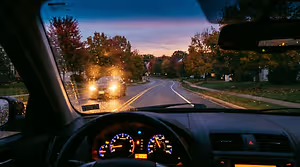
Why Is Night Driving Harder in October?
Two things change at once. The pupil opens wider in low light, which lets in more scattered light from oncoming lamps, and the eye has to switch constantly between a dark road and a bright dashboard. Add glare from a wet windshield and the eye spends the whole drive recovering instead of seeing clearly.
An uncorrected astigmatism or an outdated prescription makes every one of those moments worse. So does dry eye, because a rough tear film scatters light the way a smudged lens does. If driving at dusk became uncomfortable this year and did not used to be, that change is worth an explanation.
Are School and DMV Screenings Enough?
No, and the gap is bigger than most parents expect. A school screening measures how well a child reads a chart at a set distance. It does not test eye alignment, focusing stamina, color vision, peripheral vision, or the health of the eye itself. A DMV test is narrower still: it checks whether you meet a legal minimum for driving, not whether your eyes are healthy.
Some of the conditions we find are quiet. Glaucoma can take side vision first with no symptoms to notice. Diabetic changes in the retina can develop before anything looks blurry. A child can pass a screening and still be working hard all day to keep print in focus, which shows up at homework time as fatigue or avoidance rather than a complaint.